Static Dread: The Submarine How to Use Sonar on the Ares
Classify the ping before you decide it is a ship — or a mouth.
Sonar is the mechanic that makes Static Dread: The Submarine feel like a submarine. You do not get an RTS overlay with friendly diamonds. You get noise, percentages, and a First Mate who has to tell the bridge whether to follow, evade, or keep listening. This guide is for the retail console on the Ares after the 14 August 2026 launch. Playtest footage still teaches the loop; the launch notes remind you that demo saves do not transfer.
If you have not finished the accident yet, read Getting Started first. If you cannot operate the panel, check Controls. Staffing who sits the watch is covered in crew management.
Why the lock will not grab
Early dialogue is blunt: you cannot lock on automatically, so you check the sonar manually. That is not a bug. Classification is the minigame. You compare mechanical versus organic sources, watch confidence numbers move, and pick a command — analyze, evade, transfer to the bridge, or wait. A large-mammal acoustic signature with vocalizations is a whale, not a hostile hull. Calling a whale an enemy wastes a heading and teaches the Captain the wrong lesson about what is out there.
Unknown returns are the point of the horror. Wrecks, trenches, and rifts can look similar until you spend analysis. Active pings map the black water and also announce the Ares. Passive listening is safer and slower. When the story later asks whether you should dive a newly torn tectonic rift, that is a sonar question and a moral one. The story walkthrough places those watches in order; this page tells you how to read the screen when you get there.
A practical watch loop
- Sit the mainframe when the roster or an officer sends you.
- Locate contacts. Some missions ask you to analyze at least three before a heading plan unlocks.
- Separate animal, mechanical, and leftover “unknown” buckets. Do not mash the highest percentage if the fiction is screaming whale.
- Send a useful heading: toward the coast, toward friendly navy noise, toward a wreck you can salvage, or away from a thing that answered.
- Leave. The boat still needs hull work and reactor attention. Sonar is not the whole game.
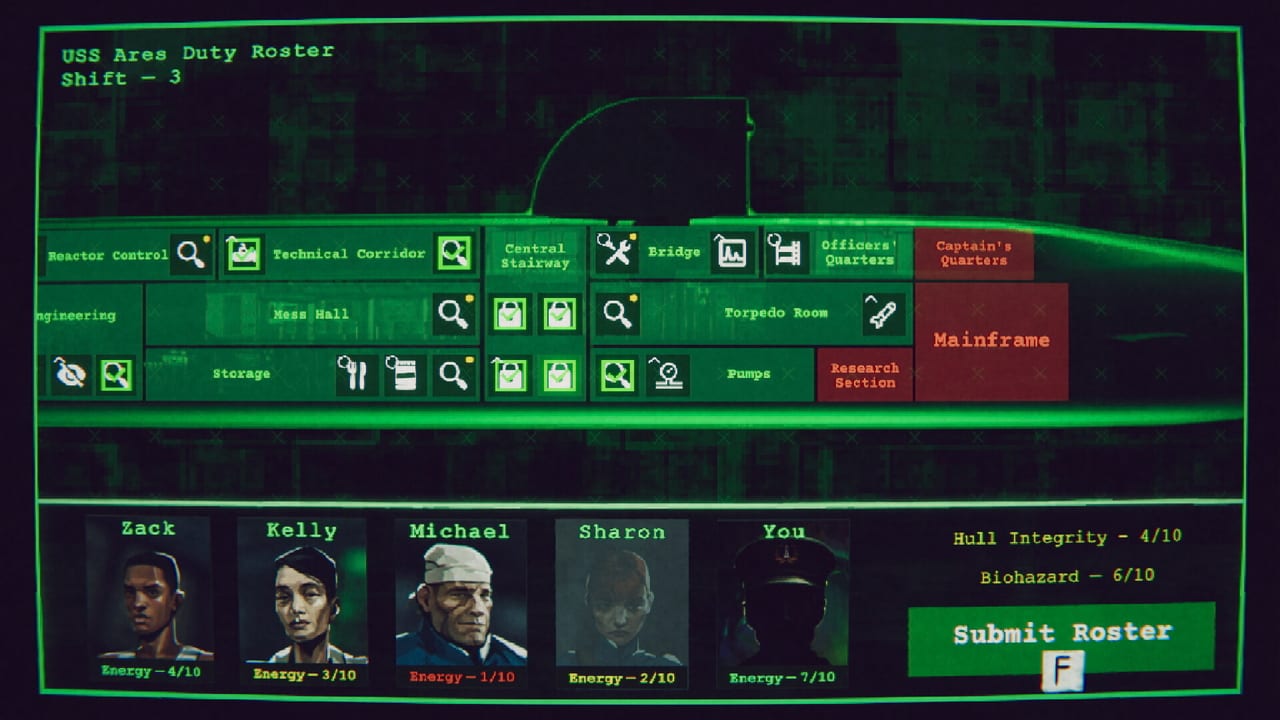
Salvage watches matter. Playtest runs recover objects such as NMA-237 from the floor with an external drone after a contact is understood. That is logistics plus sonar, which is why Michael and Sharon still need assignments on the crew roster while you stare at waveforms.
What answering back actually means
Store copy is not kidding: not everything in the ocean follows military protocol. Later watches can be other boats, dead boats, or something alive. If a contact behaves like a vessel and then does not, stop treating the screen like a quiz with one correct multiple choice. Record what you saw, tell the bridge, and decide whether the Ares should hunt, hide, or run for the coast.
Ping discipline also feeds endings. Reckless investigation toward a temple, a key, or a city that should not be there is how some runs become cultist or Great Old One stories. Cautious watches that prioritize surviving sailors feed Dream Team and the kinder flags on the endings guide. Neither path is “the sonar puzzle solution.” Sonar is how you choose a path.
Common mistakes
- Treating every high-percentage “enemy vessel” tag as gospel while an officer is describing mammals.
- Skipping the three-contact homework so the heading plan never unlocks, then wandering the boat confused.
- Leaving sonar unmanned because you are hunting collectibles. The jukebox will not stop a rift.
- Using Lighthouse radio codes on this console. Those numbers are from the other game. They do not belong here.
When communications or torpedoes are still down, sonar is described as maybe the only chance to find a friendly profile or a way home. That is why officers keep sending you back. It is also why the how to survive page treats a missed watch as a leak you cannot see.
Finish a clean classification, pick a heading, then go staff the next crisis. The North Atlantic does not wait for you to admire the UI. For a full plot of which watches appear when, continue with the Walkthrough Hub. For whether the system stays interesting after two hours, the review talks about minigame simplicity without pretending sonar is optional.
A good First Mate does not ping for sport. A good First Mate knows a whale from a warship and still gets scared when the third option starts talking.
Frequently Asked Questions
Quick answers to the most common questions.
Why can't I lock onto a contact?
Manual classification is the design. Compare organic and mechanical signatures, then choose a command.
Is a whale an enemy?
No. Large-mammal vocalizations are animals. Mis-tagging them wastes headings and story trust.
Should I always use active sonar?
Active pings map more and announce you. Use them when you need a wreck or a heading, not as a fidget.
Does sonar change endings?
Headings and what you choose to follow feed later flags. See the Endings Guide after your first run.